

This book has opened my eyes.
I firmly believe that words matter. The way we use them shapes our world and our connection with others. The way we speak to others can change the way they feel.
We can be violent with our words because words can hurt, but we can also be compassionate with our words, they can heal.
In the Italian version, the title of this book is: “Words are windows (or walls)”.
The method the author offers is simple but powerful (and yes, it applies to self-talk too):
Step 1
Observations
Observe what the other person is saying or doing without judgement or analysis. Just notice it as it is. This helps you recognise when you are slipping into judgement.
Step 2
Feelings
Notice how their words or action make you feel. What emotions do they trigger?
Being aware of our emotions is key. I use a guide to help identify mine (this is not in the book).
The emotions wheel:
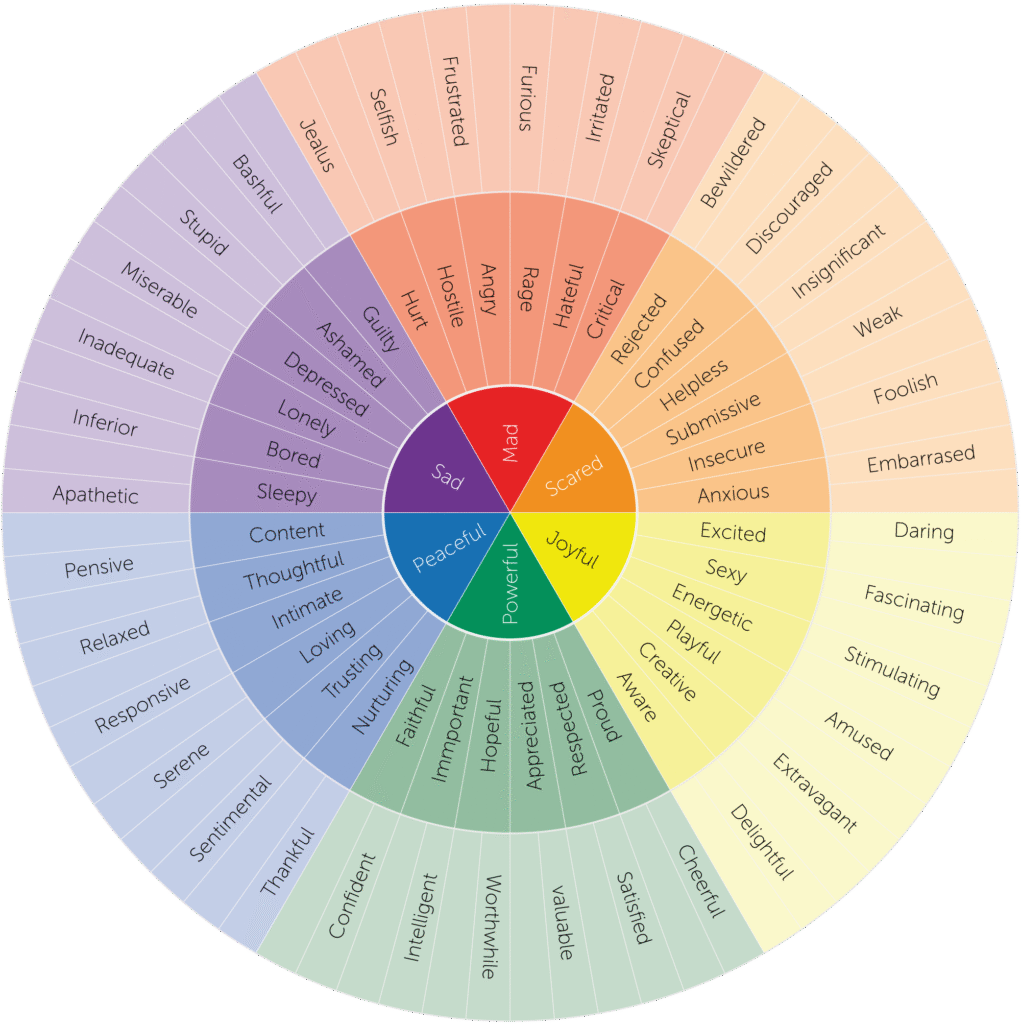
Identifying our emotions helps us become less reactive because the only way to managing feelings is not to react to them.
Also, this book finally helped me understand what it means to take responsibility for my own emotions.
The other person may trigger me, but they are not the cause of how I feel. We are responsible of how we react, that is what is under control, not the other person.
We believe ourselves responsible for the feelings of others. We think we must constantly strive to keep everyone happy. If they don’t appear happy, we feel responsible and compelled to do something about it.
Step 3
Needs
After having identified the feeling, the next question is:
What need is connected to that feeling?
Blaming and punishing others are superficial expressions of anger.
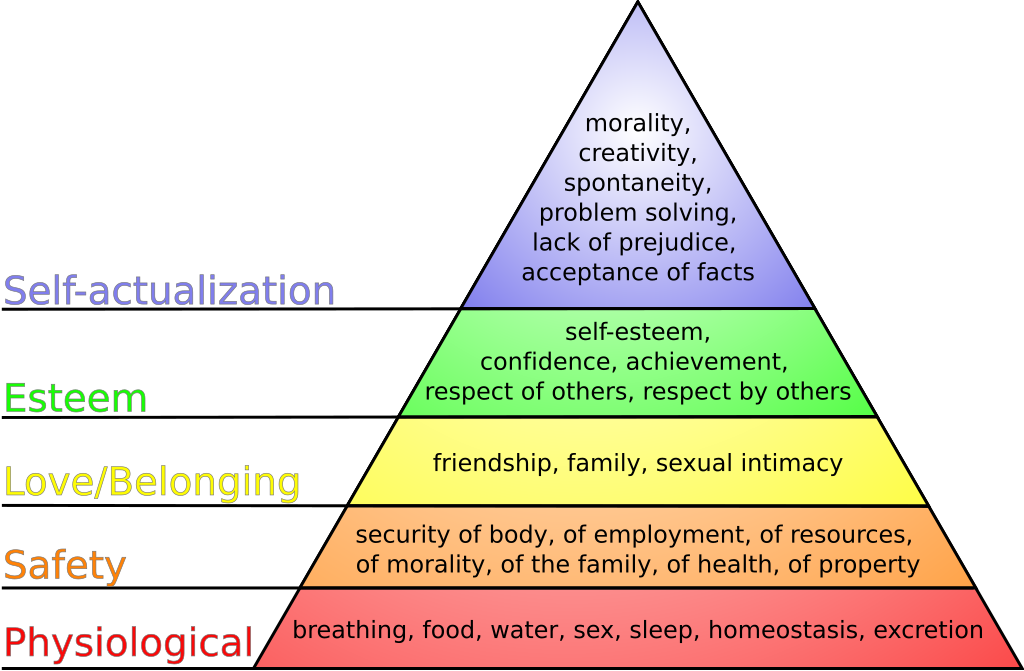
Too often, we focus on classifying or judging rather than on identifying what we, or others, need. A need exists independently of other people of actions.
A need is what is missing.
So when I talk to myself after noticing an intense feeling, I look at the words or actions that triggered it, and then I ask myself:
“What need is not being met?”
Analyses of others are actually expressions of our own needs and values.
To help us identify our needs we could use the needs pyramid (this is not in the book):
Step 4
Requests
Say clearly what you would like from the other person.
Do not use vague and judgemental language.
Be precise in the expressing your feelings and needs.
In Conclusion
This book gives a method to better communicate with the others and with ourselves.
I have learned so much, but one core idea stays with me, and I write it here as a reminder to myself, and hopefully as something that can help you, too.
When we get angry, we start judging others instead of focusing on what we need and are not getting. But, from now on, if someone triggers an emotion in you, ask yourself:
“What is my unmet need?”
And then use your energy to work on that, not to feed the emotion you felt.
In other words, look at the situation in terms of needs (theirs and yours). You are the one responsible of your own needs.
This has helped me see more clearly and has made me feel liberated from the pressure of waiting, vainly, for others to change.
At the end of the book there are exercises to help you practice, but of course the real learning comes from real life. This is just the theory. You will discover for yourself whether it works or not.
It works for me and I hope it will work for you too.
Title: Nonviolent Communication: A Language of Life
Author: Marshall B. Rosenberg
Year First Published: 1999