Skip to content

Non-Fiction

The Subtle Art of Not Giving a F*ck (by Mark Manson)

The main message delivered by the author of this book, who is a popular blogger, is that we don’t have to be positive at all times and that what we should instead do is choose what deserves our attention. How many times have I been told in difficult situations: “Think positive!”, especially from people who have never been in that situation before and have zero idea what I might be feeling at that moment. Ironically, wanting to be positive implies that you’re not happy. It’s… Read More »The Subtle Art of Not Giving a F*ck (by Mark Manson)

Love Letters of the Great War (edited by Mandy Kirkby)

With this book, I took a glimpse at some private correspondence that was exchanged during the WW1. Lots of different strong emotions were given voice by these letters, so sometimes I felt like I was intruding on the privacy of those who wrote and received them. My favourite one was written by the primary school teacher Marin to his wife Marguerite. A few months after Marin had joined the army in 1914, Marguerite gave birth to their first child, a daughter. His letter is just… Read More »Love Letters of the Great War (edited by Mandy Kirkby)

The Universe in a Single Atom (by the Dalai Lama)

I don’t belong to Buddhism, but I have the highest admiration for its maximum authority, Tenzin Gyatso, the Dalai Lama XIV and, specifically, for his intelligence and openness towards others, including those who think differently from him. I always love listening to what he has to say, and I truly think his life enriches our world. This book is a confirmation of the consideration I have of him. The Dalai Lama’s genuine interest in science is well known and these pages are an opportunity to… Read More »The Universe in a Single Atom (by the Dalai Lama)

quiet

Quiet (by Susan Cain)

This book is about the power of introverts, a super interesting and important topic. The author, Susan Cain, is the world’s best-known expert on this personality type. Her TED talk has had over 32 million views so far. Culturally, our most important institutions – the schools and the workplaces – encourage us to work in teams and to even join “team building” activities. At school we’re spurred to have our say in class; and in our CVs we feel we must confirm that we’re able… Read More »Quiet (by Susan Cain)

The Man Who Mistook His Wife for a Hat

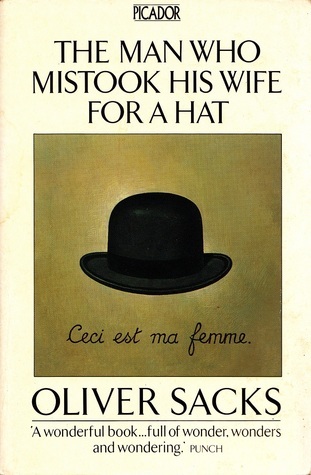
The Man Who Mistook His Wife for a Hat (by Oliver Sacks)

Being passionate about the brain and how it works, I had heard a lot about the author of this book. Oliver Sacks was a British neurologist who moved to the United States, where he spent most of his career. He was the author of numerous and best-selling books that mainly include the cases of his patients, who were people with neurological disorders. He died in 2015 at the age of 82. Before reading this book, I had watched a film, with Robert De Niro and… Read More »The Man Who Mistook His Wife for a Hat (by Oliver Sacks)

Flow

Flow (by Mihály Csíkszentmihályi)

This is one of those books that I kept finding cited in a number of others that I have been reading, so much so that I had already got the concept of “flow” long before I read it. The author with the unpronounceable name – until you learn how to pronounce it – is a Hungarian psychologist who, about 70 years ago, moved to the USA and spent his career there. He died last year (in 2021) at the age of 87. Csíkszentmihályi‘s research and… Read More »Flow (by Mihály Csíkszentmihályi)

Evolve Your Brain

Evolve Your Brain (by Joe Dispenza)

Until about 50 years ago, scientists believed that the brain didn’t change after childhood. Now we know instead that the brain can and does change throughout our life. It keeps adapting and reconfiguring its structure, in response to new information, sensorial and environmental stimulation, thoughts and even damage. The brain’s ability to do all this is called neuroplasticity. The scientists who study it and its impact on people’s lives are called neuroscientists. The brain of a child is more plastic, which is why it’s easier… Read More »Evolve Your Brain (by Joe Dispenza)

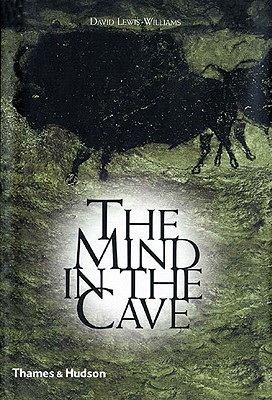
The Mind in the Cave (by David Lewis-Williams)

What is art? The word art is used today to describe a wide variety of things from prehistoric cave paintings to those apparently nonsensical installations you find in modern galleries. Music and literature are also art but here we’re going to consider visual art only. Is visual art made to be looked at? Is it made for spiritual purposes? Is it made just as a creative outlet? Does art have as many meanings as the artists who make it? Should art be beautiful or just… Read More »The Mind in the Cave (by David Lewis-Williams)

Sapiens

Sapiens: A Brief History of Humankind (by Yuval Noah Harari)

I was really looking forward to reading this book and I had high expectations given that there had been a lot of hype around it. Not only did it not disappoint, but it also even exceeded my expectations. The author, Yuval Noah Harari, is simply a genius. He’s a university professor of history in Israel, so the book is written by somebody who has qualified knowledge. He has made an entire course about the history of humankind too which is available for free on YouTube.… Read More »Sapiens: A Brief History of Humankind (by Yuval Noah Harari)

A Wartime Memoir: Hungary 1944-1945 (by Alaine Polcz)

This is an autobiographical and historical account of the terrible experiences that the author went through during the Second World War in Hungary. It’s narrated in retrospective which I particularly appreciated as I could get to know the author’s thoughts from a point of view after the fact as well. It’s a raw, sad and often overwhelming read. It was difficult not to pause every few pages to take a break, breath and reflect on how horrifying war is. At a certain point, when I… Read More »A Wartime Memoir: Hungary 1944-1945 (by Alaine Polcz)